H2S Lesson 2
Personal, Protective Equipment
Monitor
An H2S monitor should be worn by anyone that enters a place where H2S could be present. The monitor needs to be worn six to no more than 9 inches from their mouth. This is the “breathing zone” for that person. The H2s monitor should not be worn behind the shoulders or above the mouth since H2S is heavier than air and will be at higher concentrations the lower you go. Experts often recommend that the monitor be worn on the shirt pocket or on a break-away necklace outside the shirt. H2S monitors should never be worn inside clothing!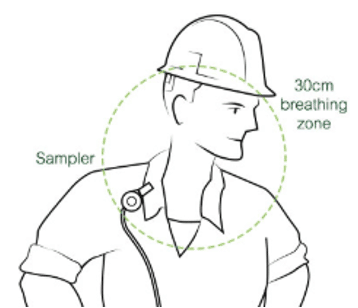
Hydrogen Sulfide monitors that are being used must be calibrated according to the manufacturer’s instructions according to 29 CFR 1910.146.c(5)(c)(ii)(c). Often this is understood as before each use, however many manufacturer’s say that this may clog the carbon filter in the monitor. Regardless of how often the monitor is calibrated the calibration must be recorded so that the user can know that it was done.
Hydrogen Sulfide monitors are preset to go off at and above 10PPM which is the level that you can smell H2S. Since Hydrogen Sulfide moves easily with the wind, it is important that you evacuate upwind If the monitor goes off. Also you can use mechanical ventilation such as intrinsically safe fans to remove H2S from confined spaces, however never assume that the ventilation is enough. You must still wear the monitor!
Respirators
Respirator use around Hydrogen Sulfide can also get confusing. If you read the NIOSH guidelines it says that you can use various respirators with H2S levels below 100PPM. The problem is that for most people that work around H2S we cannot say exactly how high the H2S concentration is. So when we take away the respirators that can be worn under 100PPM we are left with only three types. All of these are positive pressure and supply air to the respirator.
Respirators require medical clearance and fit testing to be used safely. This requires adherence to a facial hair standard to ensure a constant and complete seal between the mask and the face. Personnel should be specifically trained on the type of respirator they will use. The training must include a hands on component before the person is allowed to use the respirator in a hazardous environment.
- Emergency Escape Respirator
The exception to the medical evaluation, fit testing, and hands on training rule is the Emergency Escape 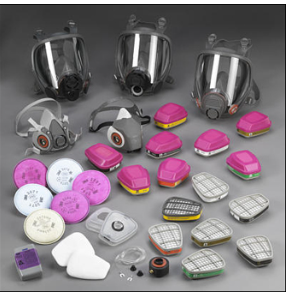 Respirator. Since this unit is exclusively used for emergencies it can be used by anyone to escape an area. These units only has about 5 minutes of air which should be enough time to get a person out of the danger zone. They should not be used for rescue attempts!
- Air Line (often called Cascade type)
In an Air Line Respirator a series of tanks are connected to a hose which is in turn connected to the user. An Attendant monitors the tank pressure and keeps the user informed of tank level. While this is a good system that can be used for long periods, the user needs to keep a 5 minute escape respirator with them in case the hose gets tangled or kinked.
- Self-Contained Breathing Apparatus (SCBA)
An SCBA (not SCUBA) is a respirator that has a tank or a pair of tanks which is connected to the users mask. The tanks are worn on the users back which makes it easier to use than Air Line Respirators, but SCBA’s have a short (30 to 45 minute) air supply. Since OSHA requires SCBA tanks to be kept 90% full at all times, SCBA tanks should not be used unless they show at least 90% full when starting. Tanks less than 90% may be leaking.
The steps for using SCBA are;
- Check the pressure gauge and ensure it is at least 90% full
- Place the bottle with the valve away from you while extending the straps and removing tangles
- Grab the bottle with both hands and lift it over your head. The straps should fall over your elbows.
- Bend forward slightly so that the bottle rests on your back.
- Connect the chest strap and tighten the shoulder straps.
- Stand up so that the bottle rests on your back.
- Connect the waist belt. Overtightening may make it difficult to breathe.
- Open the tank valve and the regulator valve.
- Inspect the mask for damage and ensure you can get a good seal.
- Performa negative pressure check by placing the mask against you face and inhaling. The mask should be sucked in toward you face slightly if the seal is airtight.
- Leaving the mask in place, pull the straps over your head and tighten starting with the bottom straps.
- Attach the hose to the regulator.
- Open the main control valve all the way. If the regulator has an emergency bypass valve you should also open it slightly. This will allow you to have air if the regulator fails and you need to evacuate.
When you are done using the SCBA respirator it should be inspected and serviced. This will help ensure that it can be safely used when needed next. The inspection should include;
- Replace air cylinder if it is below 90%
- Cleaning the face mask
- Checking the harness for rips and broken connections.
- Extending all straps
- Storing the SCBA in its correct space.
Rescue Technique
You come upon a person laying on the ground with his H2S monitor beeping. What do you do? You may want to rush in and using what you learned so far, pull him upwind, but that is the wrong answer. OSHA has estimated that two out of three deaths occur to the want to be rescuer. So what do you do?
The first thing that any person coming upon a scene where another person was injured is protect themselves. Make sure you and any other that are around are upwind, put on your PPE, and check your H2S monitor. Call for help! If there are others near by have them call for help also.
If your are trained, medically evaluated, fit tested, and have either an SCBA or Line air respirator then you should rescue the victim. Always use a buddy system when rescuing. Otherwise you will need to wait for rescue personnel.
Since the brain can only survive 4 to 6 minutes without air, it is important to restore the victim’s airway within 3 minutes. Getting the person to a safe area is critical but you must be careful to protect their head, neck and spine. Rescue breathing should begin as soon as possible while being very cautious of escaping Hydrogen Sulfide from the victims lungs and clothing. Removing bulky clothing from the victim is often recommended.
The following steps should be taken to revive the victim;
- In the victim is not breathing, give 2 slow breaths
- Check for a pulse. If the victim has a pulse continue rescue breathing. If there is no pulse begin chest compressions.
- If the victim begins breathing treat for shock and evaluate for other injuries.
- If oxygen is available and you are trained to give it, do so.
- The victim should not be allowed to eat or drink.
Emergency Action Plan
Before starting work in an area where Hydrogen Sulfide could be present, it is important to; plan out, write down, and communicate an Emergency Action Plan. The procedure should designate a safe area upwind or cross wind of where a toxic environment could be. It should also include emergency numbers, a roster of personnel, first aid and PPE locations, and special instructions for EMS such as guides, road markers, and hazards. If you do not write it down it could be forgotten when an emergency occurs. Likewise if it is not known by the people on site it has no purpose.